 Written by
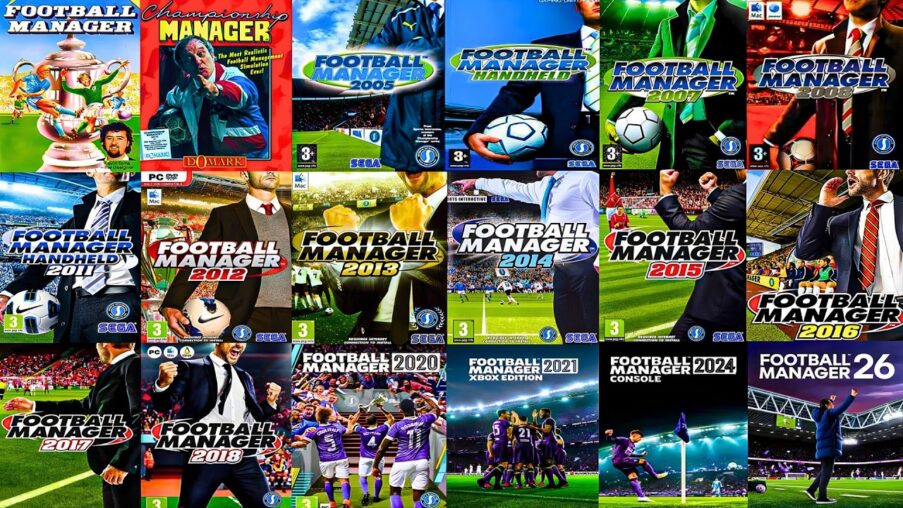
 The story of this legendary game series goes all the way back to 1985. That’s when two brothers, Paul and Oliver Collyer, decided to create their own football management game. Having played many titles in the genre, they came to a simple conclusion: it was time to build something better. They believed they could outperform the competition—and they set out to prove it.
Championship Manager was finally completed in 1991 and released in 1992 on Atari ST, Amiga, and later on PC. Developing the game was no easy task. The goal was clear from the beginning: to create the most advanced and feature-rich football management simulation possible. Then came Championship Manager 1993, a title that turned out to be—fortunately—highly realistic. Players quickly noticed the extensive database of footballers, and that became one of the key reasons behind the series’ growing success.
As Oliver Collyer later admitted: “Good reviews made us happy; bad reviews made us miserable.” Today, he laughs about it. Back then, however, negative criticism frustrated the Collyer brothers, especially since they believed players genuinely enjoyed CM93. And the numbers confirmed it—the game was selling extremely well.
However, it was Championship Manager 2—and its expansions for the 1996/97 and 1997/98 seasons—that truly raised the bar. Sports Interactive was growing, and the team clearly enjoyed working on the game. At this point, it was no longer just a new project—it had become a full-fledged series, and more importantly, a serious business. Players now had expectations. The Collyer brothers listened closely to community feedback, shaping the game, refining mechanics, and adding new features.
The Bosman Ruling – A Turning Point in Football
To understand the evolution of the game, we also need to look at the 1990s. This was when the Bosman ruling—named after Jean-Marc Bosman—changed football forever. The court decision allowed players to move to another club for free once their contracts expired.
Naturally, Championship Manager had to adapt. Accuracy and realism were always at the core of the game, and this legal shift in real-world football had to be reflected in gameplay mechanics.
Today, the game relies on a massive global scouting network, covering countless clubs across multiple countries—not just top-tier teams, but lower leagues as well. Football Manager aims to mirror the real football world as closely as possible. Anyone who has played the game knows just how massive this undertaking is. On top of that, the developers had to secure licenses to ensure everything remained fully legal and authentic.
Football Manager Today
In the modern Football Manager era (no longer Championship Manager), one thing stands out immediately: the scale and complexity of its artificial intelligence. In many games, you might find around 40 non-playable characters. In Football Manager, there are over half a million. That alone shows the incredible depth of the simulation.
The series has firmly entered the modern gaming era. Sports Interactive has grown significantly, becoming a major studio. Football Manager is now a global brand—and there’s no sign of it slowing down anytime soon.
Football Manager 2026 – Where Are We Now?
The latest installment of the game was released on November 4, 2025. One of the biggest breakthroughs was the transition to the Unity engine, along with securing the official Premier League license. Another major addition is women’s football—an exciting new chapter for the series.
And to think, it all started with a simple idea from two brothers. Thanks to Paul and Oliver Collyer for creating something truly special.
Let the journey continue…